DFN junior research fellowship for Tineke van de Weijer

Tineke van de Weijer has been awarded the prestigious Junior Research Fellowship 2015 from the Dutch Diabetes Research Foundation for her project entitled "The role of cardiac mitochondrial function and lipid accumulation in the development of cardiac insulin resistance; etiology and treatment strategies". The ambitious project is a collaboration between the Departments of Radiology (J. Wildberger), Nuclear Medicine (F. Mottaghy and M. Bauwens) and DMRG (P. Schrauwen, M. Hesselink and V. Schrauw...
Read More


TIFN-NWO project grant for Patrick Schrauwen and Joris Hoeks

Within the System Approaches for Food and Nutrition program, a partnership between the Top Institute for Food and Nutrition (TIFN) and the Netherlands Scientific Organization (NWO), Prof. Patrick Schrauwen and Dr. Joris Hoeks received funding for their project entitled "Nutritional approaches to preserve and improve mitochondrial health and physical function in the elderly". The project (2.2 million euro) is a joint venture between Maastricht University, Wageningen University and the University ...
Read More

Best abstract for Anne Gemmink

Anne's abstract entitled “Change in insulin sensitivity upon a 5-day high-fat diet is related with changes in skeletal muscle PLIN5 protein content in Caucasians, but not in South Asians” was selected for the best abstract session at the Annual Dutch Diabetes Research Meeting (ADDRM) 2015.  Anne presented her results about different responses on insulin sensitivity and PLIN5 protein content between Caucasians and South Asians on November 27th.
Read More

Bile acids as a therapy to combat obesity

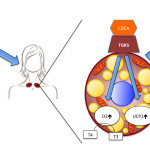
In a recent publication, DMRG demonstrates that a 2-day intervention with bile acid chenodeoxycholic acid (CDCA) increases brown adipose tissue (BAT) activity together with whole body energy expenditure in healthy humans. Further the involvement of bile acid receptor TGR5 is demonstrated in this human proof-of-concept study. The results have been published in Cell Metabolism.
Read More

DMRG in Nature Medicine

Cold exposure may be a potential therapy for diabetes by increasing brown adipose tissue (BAT) mass and activity. In a recent publication, DMRG shows that 10 d of cold acclimation (14–15 °C) increased peripheral insulin sensitivity by ~43% in eight type 2 diabetes subjects. Basal skeletal muscle GLUT4 translocation markedly increased, without effects on insulin signaling or AMP-activated protein kinase (AMPK) activation and only a minor increase in BAT glucose uptake. The article was publishe...
Read More

DMRG benefitconcert

For the third time DMRG will participate in the Diabeatit Run to collect money for the Dutch Diabetes Foundation. For this occasion DMRG organizes a benefitconcert on June 4th, 2015 at 20.00 hrs in the Chapel of the congregation called ‘Zusters onder de Bogen’, Sint Servaasklooster 14, 6211 TE Maastricht. A unique place in the heart of the citycenter of Maastricht. The well known semi-professional Maastricht Chamberchoir will perform specific choirmusic from the Barock (Bach, Purcell) and Romant...
Read More

Diabetes and Metabolism Research Symposium 2015

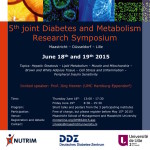
It is our great pleasure to announce the `5th Diabetes and Metabolism Research Symposium´, a joint initiative from Maastricht University, the German Diabetes Center in Dusseldorf and the University of Lille. The meeting will be held on June 18th and 19th 2015, at Maastricht University Medical Center. The aim of this informal meeting is to present and discuss the ongoing and collaborative research on all aspects of type 2 diabetes, insulin resistance and (energy) metabolism. An important aspec...
Read More

DMRG welcomes Jakob Wefers

Starting April 1st, the Diabetes and Metabolism Research Group welcomes Jakob Wefers as a new PhD student on the project "Circadian Rhythm of Muscle Mitochondrial Metabolism", financed by the Netherlands Organization of Scientific Research (NWO). Jakob did his master study 'human movement sciences' at Maastricht University. For this internship, he performed a study in the lab of Dr. Goodpaster at the Translational Research Institute in Orlando, USA.
Read More